(All Scripture references are NIV unless otherwise specified.)
What does the mission of God have to do with ancient Hebrew poetry?
More than we might think. At first glance, the idea of mission can seem like only a church concern and the psalms can sound old, not meant for today’s times. Yet, when we look more closely, we see that this old poetry has timeless messages for us. God’s mission is timeless, as well.
Missional theology is often summarized as the missio Dei (the mission of God). This phrase reminds us that mission does not start with the church, but with God. God is actively at work, creating, sustaining, redeeming, and guiding all things toward His purposes. This is precisely where the psalms come in. Psalms 104 and Psalm 139 offer us a window into this reality. They reveal a God whose care stretches from the very foundations of the earth to the most hidden places of the human heart, and even to the companionship of the animals who share our lives.
In light of this, these psalms speak with striking relevance for today. In a world flooded with information and shaped by artificial intelligence, these psalms offer a grounding vision. Everything, including humans, animals, and the whole cosmos, finds its meaning within God’s loving mission. Ultimately, all the living will be reconciled to Him.
Psalm 104: God’s Mission in Creation
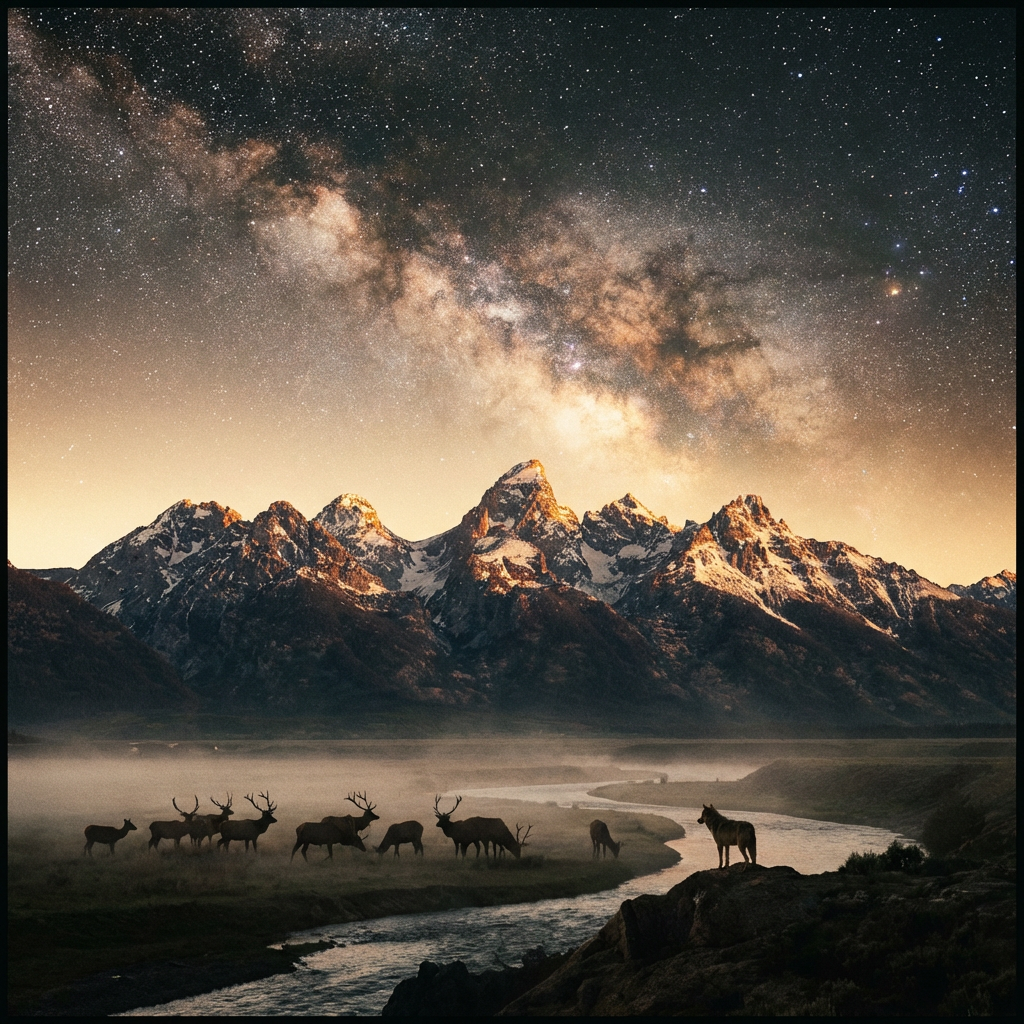
Psalm 104 reads like a hymn to the Creator King. It paints a sweeping portrait of God’s ongoing work in the world. God is not distant, but an active caretaker of all that was created (and continues to be created).
To see this more clearly, it is helpful to attend to a few verbs that describe God’s activity (missio Dei or mission of God), such as: create, set, make, bring, and govern.
For me, Psalm 104 portrays God as actively involved in the ongoing life of creation.
“He wraps himself in light as with a garment; he stretches out the heavens like a tent” (v. 2).
God doesn’t just watch the cosmos. He forms it, as He clothes Himself in light and arranges the heavens like a dwelling place.
In a similar way,
“He set the earth on its foundations; it can never be moved” (v. 5).
Creation is not random. God establishes the world with intention and stability.
The psalm then turns to life-giving waters:
“He makes springs pour water into the ravines; it flows between the mountains” (v. 10).
Water, the source of life, is not a mere accident of nature; it is a gift and a provision.
(A GHAB nugget is like an Easter egg—and you just found one! Download Willow’s story as a free EPUB and enjoy a deeper journey into God’s heart for animals.)

That care extends to daily provision for creatures, too.
“He makes grass grow for the cattle, and plants for people to cultivate—bringing forth food from the earth” (v. 14).
God nurtures the earth so that both animals and humans can flourish.
Even the rhythms of time and wildness are held in His hands:
“You bring darkness, it becomes night, and all the beasts of the forest prowl” (v. 20).
Even the cycles of day and night, the rhythms of predator and prey, are held within God’s wise governance.
Taken together, these are the verbs that reflect the missio Dei: creating, setting, making, bringing, governing. Psalm 104 portrays God as actively involved in the ongoing life of creation.
When we place this alongside missional theology more broadly, we notice something important. Missional theology often focuses on evangelism, justice, and church planting—and rightly so, and yet, Psalm 104 widens the lens: God’s mission includes the flourishing of all creation. Humans, animals, land, and seas are wrapped together in God’s loving purpose.
Psalm 139: God’s Mission in the Intimate Details
If Psalm 104 gives us the wide-angle view, Psalm 139 zooms in on the personal and particular. Here, the verbs reveal a deeply relational God.
“You have searched me, Lord, and you know me” (v. 1).
God’s mission is as close as your breath. He searches and knows us.
“O Lord, you have searched me and known me.”
New Revised Standard Version: Updated Edition (Friendship Press, 2021), Ps 139:1.
In other words, the Lord is familiar with your ways. This text explores the idea that no matter how far you travel, whether to the east or west, or even into the depths of darkness, God’s presence remains. The notion of darkness is addressed, too. Scripture says that even the deepest darkness is not a barrier for God, as He can illuminate it. His presence is like a Holy embrace.
God’s Presence: Protective and Surrounding
Of course, there’s a certain level of mystery to the ways we “feel” God’s embrace. The Psalmist expresses wonder and awe, which fuels the imagination.
New Revised Standard Version: Updated Edition (Friendship Press, 2021), Ps 139:13.
As the psalm unfolds, the psalmist recognizes God’s omnipresence (presence everywhere) and omniscience (all-knowing), expresses his wonder, then he prays to open himself to the most scrutiny (1:24). His words imply speaking to both the wicked and the pious.
“Your eyes saw my unformed body; all the days ordained for me were written in your book before one of them came to be” (v. 16).
Here again, we see that God’s mission includes attentive care and foreknowledge. Our stories are held within His story.
Flowing out of this assurance, the psalmist prays, “See if there is any offensive way in me, and lead me in the way everlasting” (v. 24).
God doesn’t just create us and leave us. He guides humans toward life, transformation, and holiness. In a similar way, He guides the animals to be companions in His work through the guidance and sustenance of the Holy Spirit. We learn to live with and shepherd the animals God has gifted us with.
When we step back and take in the whole picture, we see the missio Dei at work. It operates not only on a global, cosmic scale but also in the intimate details of each life. God searches, knows, knits, lays His hand, creates, sees, writes, and leads. Every individual is known, valued, and invited to join in His mission.
This vision reshapes how we see every living being. God’s loving attention extends to all the animals. Thus, every life carries dignity, from the womb to the final breath. As God leads us, we are called to show His love. We must show compassion. Our calling is to build deeper bonds with one another and with the natural world. Yes, this extends even to the animals who share our lives.
God’s Mission: Cosmic and Personal
Bringing these threads together, Psalms 104 and 139 have an important message. They remind us that the missio Dei is both cosmic and personal.
– God sustains galaxies and grasslands, oceans and ecosystems.
– God searches our hearts, writes our days, and leads us in the way everlasting.
All in all, in a world that often feels fragmented and overwhelming, the missio Dei holds everything together. The God who wraps Himself in light and knits us together in the womb is still at work. Through this, He’s renewing creation and calling us into partnership. He invites us to see every part of life, from the natural world to the digital age, as a place whee His love can be known.
So the question is, will we lose sight of our mission? If you have, return to it, or allow God to reawaken your imagination to see creation differently?
As we walk our dogs, we scroll our feeds, study the psalms, and listen for God’s voice, we will discover that He has been inviting us all along. Let’s join God’s beautiful, redemptive mission for all creation!
Leave a Reply